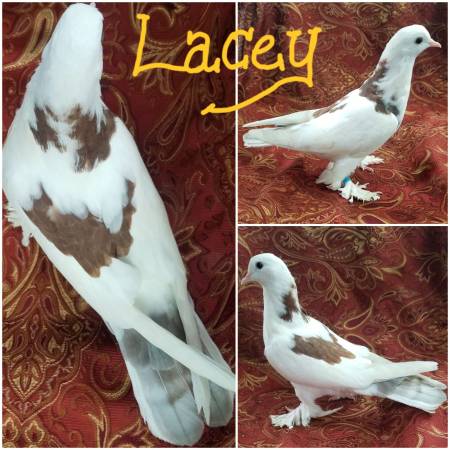
Lacey
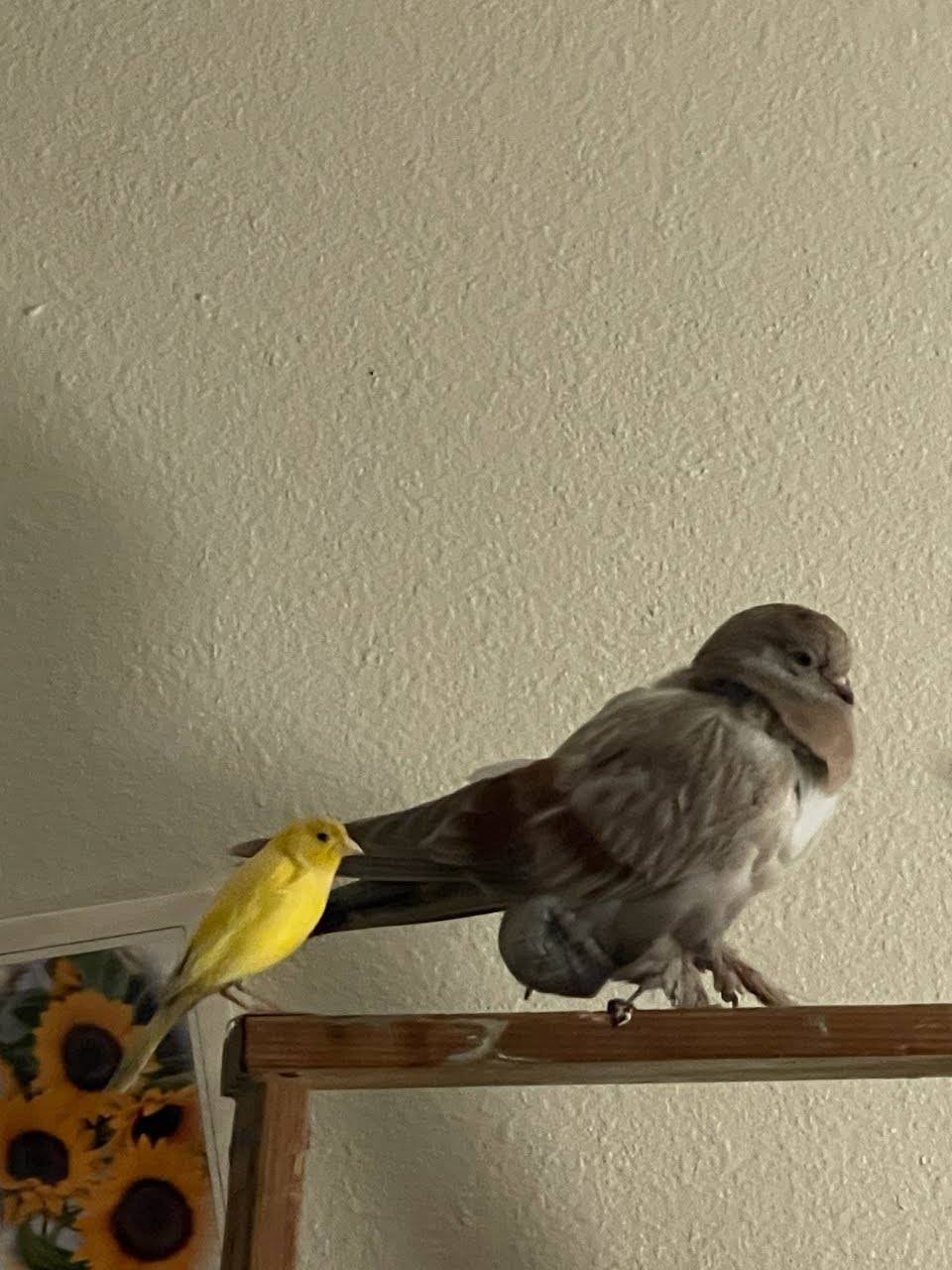
Initially shy, then calm, inquisitive, and social. Lacey comes when called, settles nearby during chores or reading, and may gently groom hands and ears.
Beaverton and Hillsboro, Oregon
Every pigeon here is somebody. Some are bold little shadows who want to follow you everywhere. Some are quiet souls who bloom slowly with gentle hands and a familiar voice. We get to know them, love them, and help them find the home—or thoughtful pet store—that fits who they truly are.
Why pigeons
A well-socialized pigeon may follow a favorite person from room to room, settle on a shoulder or lap, ask for attention, preen hands and hair, come when called, or quietly keep someone company while they read and work.
Some open their hearts quickly. Others need calm routines, a soft voice, treats, and patient hands before they feel safe. Watching that trust grow is one of the sweetest parts of sharing a home with a pigeon.
Our birds
We describe what we have lovingly observed. Some pigeons actively seek people. Others need more time, prefer another pigeon, or feel safest with an experienced home.
Initially shy, then calm, inquisitive, and social. Lacey comes when called, settles nearby during chores or reading, and may gently groom hands and ears.
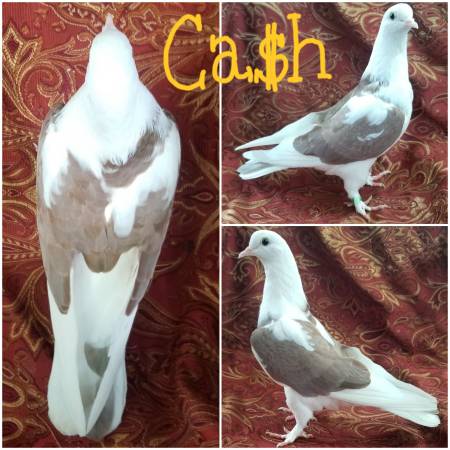
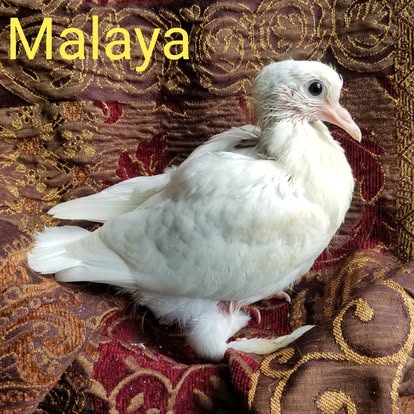
Sweet, curious, and social after she settles in. She eats eagerly from a hand and likes quiet company while people work on chores or hobbies.
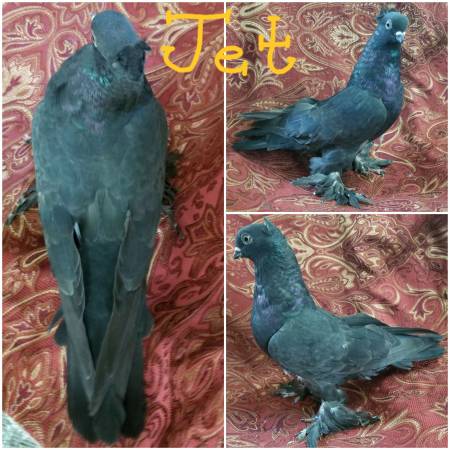
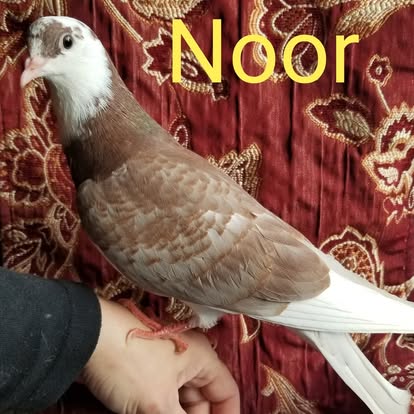
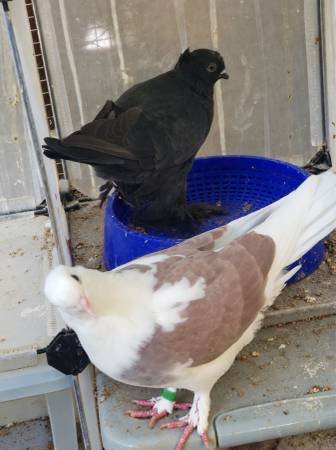
Observant, fast, and more bird-oriented than people-oriented. Jet reminds us to listen to the bird in front of us and look for the home where they can feel most at ease.
These profiles show the kind of information we keep with each bird. Current availability is always confirmed personally.
For pet stores
We would love to work with local stores that want to carry a small number of companion pigeons, teach customers what they truly need, and help each bird find a safe and loving home.
Each pigeon leaves with their own story in writing: identity or band, hatch date or age estimate, sex when known, breed and color, familiar food, weights, handling and personality notes, veterinary history, test results, medications, treatments, and vaccinations actually given.
That record helps familiar care follow the bird into the store and then home. When something is unknown, we simply say so; a guess never belongs in a bird's history.
Room to walk and stretch, clean surroundings, fresh meals and water, peaceful rest, and familiar people help a pigeon settle in and let their personality shine. A quiet space for new arrivals also gives every bird a gentler beginning.
Customers may be meeting a companion pigeon for the very first time. A warm introduction to the bird's care, personality, and need for patience can help that first spark of interest grow into a loving, well-prepared home.
Share a little about your store, your city, and the number of pigeons you are considering. We can talk together about availability, pricing, daily care, and the individual birds who may be ready.
Beginning with a small group gives the birds and staff time to become comfortable. We stay available for honest questions as everyone settles into the new routine.
| First order | We love beginning with a small group, chosen from the birds who are truly ready at that time. |
|---|---|
| Pricing | We share wholesale pricing directly so age, breed, socialization, and group size can be considered fairly. |
| Local handoff | Pickup or arranged delivery is available in Beaverton and Hillsboro; every pigeon is placed through a local, personal handoff rather than the mail. |
| Help for staff | This care guide is ready to print or share, and we are happy to talk through the routine together. |
| Individual records | A complete health-and-care record travels with every bird. Vaccinations and preventive medications appear only when they were actually given and documented. |
| Health history | We share everything we know and what we presently observe, without making a promise that no living bird could ever become ill. |
| A clear agreement | A short written agreement before the first order keeps illness, acceptance, and return plans clear and kind for everyone. |
Care guide
Good care begins with a quiet look, a familiar routine, and somebody who notices the little changes. This guide brings together pigeon-specific avian-veterinary information, general bird care, public-health advice, and Oregon biosecurity guidance. It offers education rather than a diagnosis; an avian veterinarian remains the right person for an individual bird's medical care.
Care information reviewed October twenty twenty-six.
Moving is a big day for a little bird. A new pigeon deserves a calm place to breathe, look around, and learn that they are safe before customers or other birds are introduced.
A clean, disinfected, completely dry enclosure in a quiet area makes the first day softer. A labeled set of bowls, towels, carrier, and cleaning tools keeps each new group safely separate. With an avian veterinarian and emergency plan already written down, help is close if a bird ever needs it.
The pigeon can settle while a familiar caregiver quietly notices posture, breathing, eyes, nostrils, feathers, feet, activity, and droppings. The accompanying record confirms identity, age, sex if known, familiar food, and transfer date. A calm weight in grams and the food the bird already recognizes create a useful, comforting starting point.
The Association of Avian Veterinarians recommends at least forty days of quarantine for every newly acquired pigeon. A separate enclosure—and separate airspace when practical—protects both the newcomer and the birds already at home. Their dishes, supplies, and cleaning tools remain their own, with handwashing between groups and established birds cared for first.
An early visit with an avian veterinarian can include a physical examination and fecal evaluation; AAV notes that bloodwork may also be useful in some cases. If illness, unusual droppings, or an unexplained weight change appears, the quiet separation continues while the veterinarian guides testing and care.
Checked against AAV pigeon guidance, CDC bird guidance, and Oregon biosecurity guidance.
Pigeons walk, loaf, stretch, bathe, and watch the world. A loving enclosure leaves room for all of that life, not simply a place to be contained.
A secure rectangular enclosure that is longer rather than taller fits the way pigeons move. Merck gives one and one-half times the bird's wingspan in every direction as a minimum starting point; AAV encourages the largest practical enclosure, with more room for every additional bird. Enough room lets a pigeon stand tall, turn, walk, open both wings fully, and move without brushing walls, furnishings, or a companion.
Indoors, plain paper over a solid, dry, cleanable floor makes droppings easy to see and is freshened every day. Bird-safe doors, clips, bar spacing, and gaps protect curious toes, wings, and heads.
Pigeons spend a great deal of time on their feet. AAV recommends several comfortable choices, especially flat shelves, because wire is not a kind resting surface. Food and water sit where droppings from this bird—or a bird above—cannot reach them. One enclosed side or a place against the wall can add a welcome feeling of shelter.
The gentlest location is away from kitchens, smoke, aerosols, perfume, cleaning fumes, and heated nonstick-coated products, with fresh air but no direct draft. Outdoors, a roofed retreat and secure construction protect against predators, rodents, wild birds, and rough weather.
Housing details follow AAV's pigeon-specific handout, Merck's reviewed bird-housing guidance, and AAV's household-danger handout.
A bird cannot tell us in words that an unfamiliar food is confusing or that a water bowl has become dirty. We have to notice for them.
Pigeons are naturally grain-eating birds. AAV recommends a seed-and-grain mix suited to the pigeon's size and notes that formulated pigeon pellets or suitable small-parrot pellets may be included. An avian veterinarian can shape the exact mix, portions, calcium, and supplements around the bird's age, health, and reproductive status.
A simple food record shows what was offered and what the pigeon truly ate—not only what landed on the floor. Feed stays freshest when sealed, labeled, dry, and protected from pests and chemicals; anything damp, moldy, stale, or questionable belongs out of reach.
When a pigeon eats whole seeds and grains, pigeon-sized insoluble grit helps the gizzard grind that food. A clean, measured supply can be offered in its own little dish, where it stays easy to refresh and the bird's intake can be noticed. Large, uncontrolled amounts are not kinder; AAV cautions that a bird who gorges on mineral material can become dangerously blocked.
A pigeon mineral or calcium product serves a different purpose by adding nutrients the grain may not provide. Oyster shell is a mineral source, not a complete meal and not the same thing as grinding grit. The product label and an avian veterinarian can help match grit, calcium, and any vitamin supplement to the bird's main food, age, health, and whether the bird is laying eggs.
Pigeons drink with the beak held down like a straw, so a deeper bowl lets them drink naturally. Fresh water remains available at all times. A clean refill arrives at least daily and whenever the water is soiled; hot soapy water and thorough drying keep the bowls fresh each day.
AAV says pigeons commonly enjoy bathing once or twice each week. A healthy, settled bird can enjoy a supervised shallow dish of lukewarm water, with the bath cleaned away from every human food-preparation area.
Measured by weight
Oregon State University Extension gives this pigeon formula: forty percent whole yellow corn, twenty-seven percent hard red wheat, eighteen percent whole dried field peas, and fifteen percent milo.
A ten-pound batch contains four pounds whole yellow corn, two pounds eleven ounces hard red wheat, one pound thirteen ounces whole dried field peas, and one pound eight ounces milo. Clean, dry, feed-grade whole ingredients are the safe choice—not garden seed treated for planting. Damp, dusty, moldy, stale, or pest-contaminated grain is never offered.
Many pigeons adore sunflower and safflower, but both are oily, high-fat seeds. A bird may pick out every favorite and leave the quieter parts of the meal behind, so those seeds are best measured instead of poured freely into the storage bin. AAV warns that too much sunflower can contribute to obesity, fatty liver disease, and nutritional deficiencies.
If sunflower or safflower belongs in an individual bird's plan, a small measured amount can be served as one part of the meal or saved for hand-feeding and trust building. Corn, wheat, peas, milo, appropriate grit and minerals, and—when the bird's plan calls for it—a balanced pigeon pellet keep the diet from becoming a bowl of favorite treats.
This recipe is a useful adult grain base, not a promise that one bowl fits every pigeon. A bird eating whole grains also needs suitable grit; the rest of the mineral and calcium plan depends on the complete diet and the individual bird. Squabs, breeding or laying birds, outdoor birds, unwell birds, and birds gaining or losing weight all deserve their own plan. Familiar food is changed gently, and gram weight, droppings, appetite, and what the pigeon actually eats help show whether that plan is working.
The grain proportions come from the Oregon State University Extension Pigeon and Dove Project. The Association of Avian Veterinarians explains why seed-and-grain-fed pigeons need grit, why mineral material is offered in moderation, and why sunflower seeds stay a limited part of the diet. The current Merck Veterinary Manual pigeon-nutrition review describes formulated pigeon pellets as another option. Daily bowl cleaning, fresh water, and bathing guidance also follow AAV's pigeon-specific handout.
The best care is not dramatic. It is the steady habit of looking closely, cleaning kindly, and noticing when something feels different.
The day can begin with one quiet pause: Is the bird breathing easily, standing normally, and using both feet and wings? Do the overnight droppings look usual for this pigeon? Fresh water, measured food, clean paper, and a glance at what was truly eaten complete the little morning routine.
Voice, balance, preening, appetite, and interest in the room all tell part of the bird's story. Safe exercise, something interesting to explore, and peaceful rest give the day a gentle rhythm. Customers can admire and speak softly while staff protect the pigeon from chasing, grabbing, cage tapping, or unfamiliar treats.
A final loving look confirms that every pigeon is present, alert, and able to reach food and water. Wet or heavily soiled material is changed, and temperature, ventilation, doors, and predator protection receive one last look. A change that feels wrong is a reason to call for help before the building becomes quiet.
During a deep clean, the pigeon can rest in a secure, clean carrier. Droppings, feathers, food, and other organic matter come away first so the disinfectant can work. The product label supplies the correct dilution and contact time, and every surface becomes fully dry before the bird returns. Concentrated fumes and wet chemical surfaces never share space with a bird.
Cleaning and daily observation follow Oregon Department of Agriculture biosecurity guidance and CDC bird-care guidance.
A pigeon is not being difficult when they are frightened. They are asking us to slow down and show them that our hands are safe.
A calm approach stays in the pigeon's view and leaves chasing out of the experience. The gentlest useful hold keeps all pressure away from the chest, because a bird moves the chest to breathe. Panting, nonstop struggling, weakness, or closed eyes are the bird's clear request for the handling to end.
The bird's record can preserve what they enjoy and tolerate—perhaps eating from a hand, stepping onto an arm, accepting a soft touch, or simply sitting peacefully nearby. A single pigeon flourishes with dependable daily companionship; a compatible pair may share more of that social comfort.
Supervised time in a secure bird-safe room or flight area brings welcome movement beyond the enclosure. Closed exterior doors and windows, still ceiling fans, covered gaps, and complete separation from cats and dogs make that time peaceful.
Flat resting shelves, bathing opportunities, shallow forage trays, and gentle food-search games add variety without pressure. New things can appear slowly enough for a cautious bird to inspect them at their own pace. The store enclosure is one safe resting place, not the bird's whole world.
Handling, social needs, exercise, and enrichment were checked against AAV's pigeon handout and Merck Veterinary Manual.
Birds often hide illness. Knowing one pigeon's normal little ways makes it easier to notice a change before the bird looks dramatically sick.
| Area | The everyday picture | A reason to call the veterinarian |
|---|---|---|
| Breathing | Quiet breathing at rest; closed beak; no repeated tail movement with each breath | Open-mouth breathing at rest, wheezing, clicking, marked tail bobbing, discharge, or increased effort |
| Behavior | Alert, responsive, moving normally, and interested in surroundings | Fluffed and inactive, unusually sleepy, weak, sitting on the floor, or suddenly less interactive |
| Food and weight | Eating the normal food and holding a steady trend when weighed in grams at least weekly | Reduced appetite, fewer droppings, repeated regurgitation, trouble swallowing, or a weight change approaching ten percent in either direction |
| Droppings | A consistent pattern for that bird and diet | Major change in number, color, volume, water content, blood, straining, or no droppings |
| Eyes and nostrils | Open, clear, and free of crust or swelling | Discharge, bubbles, swelling, persistent closing of one eye, or repeated sneezing with discharge |
| Movement | Balanced stance and normal use of both legs and wings | Falling, circling, head tilt, tremors, dragging a wing, inability to stand, or sudden lameness |
| Skin and feathers | Regular preening, intact skin, and feathers appropriate for molt | Active bleeding, open wounds, parasites, damaged blood feather, self-trauma, or rapid feather loss |
An avian or emergency veterinarian needs to hear from the store right away for severe breathing difficulty, collapse, seizure, heavy bleeding, major trauma, suspected poisoning, inability to stand, repeated vomiting, straining or suspected egg binding, or refusal of food with clearly reduced droppings. Keeping both the regular avian veterinarian and after-hours plan beside the bird records makes that frightened moment easier.
Warm care includes protecting the people nearby. Soap-and-water handwashing after contact with birds, droppings, bowls, bedding, or equipment helps keep germs from traveling. Bird housing and supplies stay outside kitchens and human food areas, and food, drinks, cosmetics, and face-touching wait until cleaning is finished. Lightly dampening dirty surfaces before cleaning keeps dust down; dry sweeping, vacuuming, and blowing across dried droppings can send contaminated dust into the air. Gloves and protective clothing add a barrier, and AAV recommends a mask while pigeon enclosures are being cleaned. Young children and people with weakened immune systems can ask a healthcare provider about added risk from animal germs. Any unusual pattern of illness or deaths goes promptly to the store veterinarian and Oregon animal-health officials.
Signs of illness and weekly weight monitoring follow AAV's illness handout and Merck Veterinary Manual. Hygiene language follows CDC pet-bird guidance, CDC psittacosis prevention, and AAV's pigeon handout.
Every Seventh Heaven pigeon comes with an individual record. If a fact is unknown, the record says unknown; we never fill a blank with a guess.
A vaccination entry appears only when it was actually administered and documented. AAV notes that pigeon vaccines are available for some diseases, but they are generally recommended more often for flying or sporting birds than for pigeons kept strictly as pets. The avian veterinarian decides what, if anything, fits an individual bird.
Oregon's current pet-shop record rule requires each sale record to remain on file for at least twelve months. It includes the sale date, age, breed, indication of sex, purchaser name and address, source, and breeder. When preventive-medication records are advertised or given to the purchaser, the type, amount, and date become part of the sales record. This is a caring practical summary, not legal advice; the store can confirm its own duties in the current rule.
Vaccination guidance comes from AAV's pigeon handout. Store record requirements are summarized from Oregon Administrative Rule six hundred three, division fifteen, rule sixty; the store remains responsible for confirming its duties through Oregon's current rules.
Photos
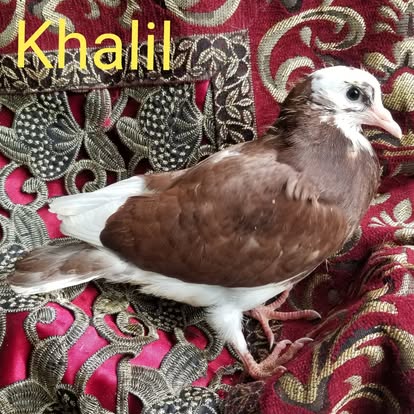
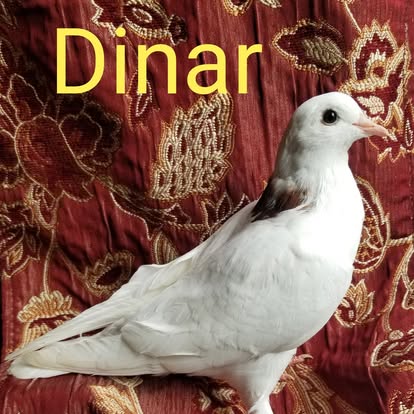
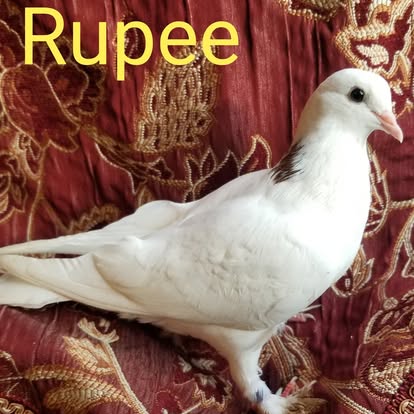
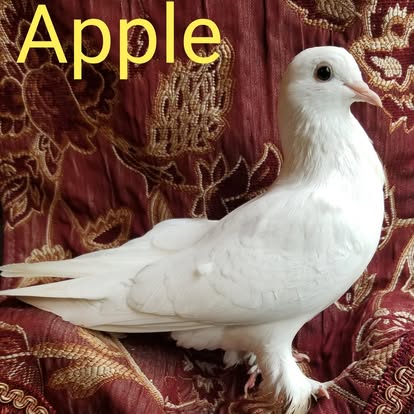
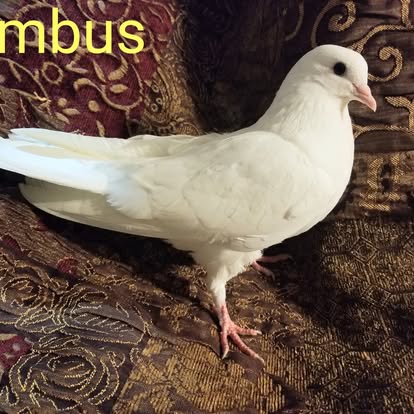
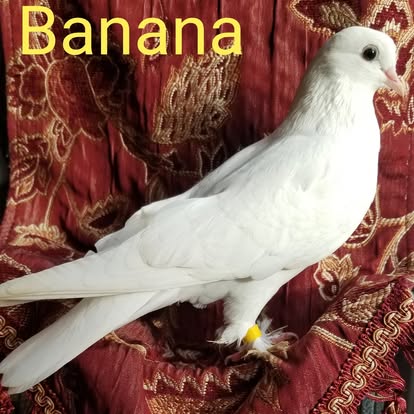
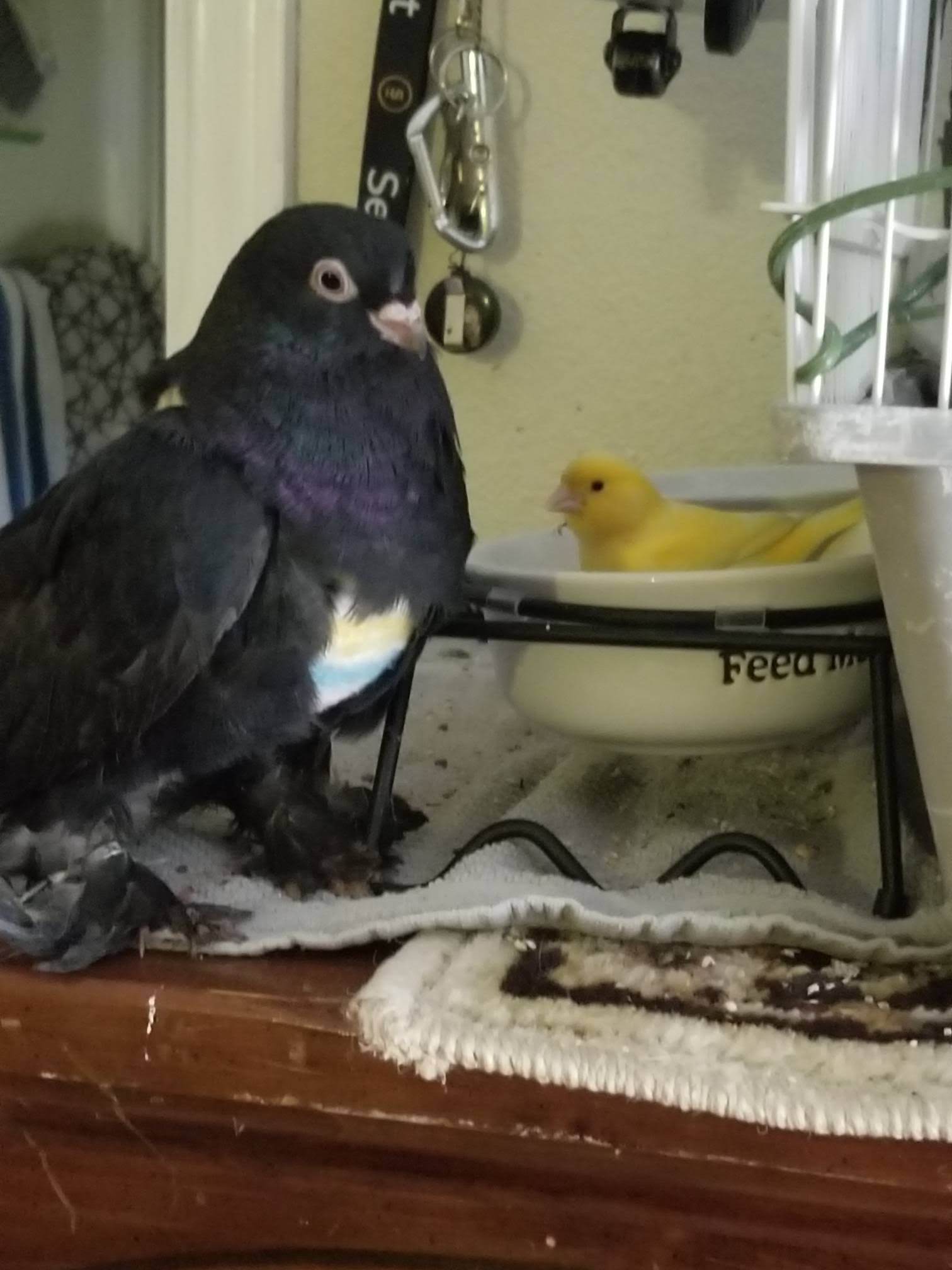
Every photo is one of our real pigeons. Availability changes, so we are always happy to tell you which birds are ready to meet a store or family.
Contact
We are happy to talk with thoughtful stores and families. A note with your name, store or household name, city, whether you are a pet store or private home, and the number of birds you are considering gives us a lovely place to begin.